Written: May 31st, 2026
Introduction
Buying coffee online has never been easier.
Buying great coffee online has never been more confusing.
A quick search for "best coffee beans" returns thousands of options. Every coffee claims to be premium. Every roaster claims to source the highest-quality beans. Labels are filled with terms like Specialty Coffee, Single Origin, Micro Lot, Honey Process, Direct Trade, and Espresso Roast.
For someone just getting started, it's hard to know what actually matters.
At Coffee Bros., we've spent years sourcing coffee from producers around the world, evaluating hundreds of samples each year, and cupping thousands of coffees throughout our careers. Along the way, we've learned that buying great coffee isn't nearly as complicated as many people make it seem.
The goal isn't to find the most expensive coffee.
The goal is to find the right coffee for you.
In this guide, we'll walk through how specialty coffee is evaluated, what we look for when sourcing coffee, and how you can confidently buy specialty coffee online.
What Is Specialty Coffee?
Before discussing how to buy specialty coffee online, it's worth understanding what specialty coffee means.
Today, terms like "specialty coffee" and "third-wave coffee" are often used interchangeably. While they're related, specialty coffee has a very specific definition.
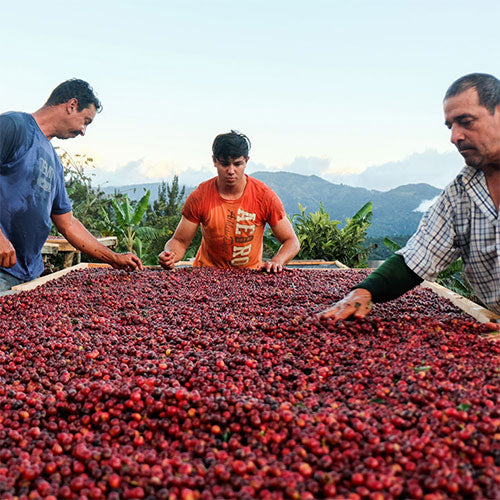
Coffee is graded multiple times before it ever reaches your cup. Producers evaluate it at origin, importers assess it before purchasing, and roasters often perform their own evaluations before deciding whether a coffee deserves a place in their lineup.
Coffee quality is measured using a standardized 100-point scoring system developed by the Specialty Coffee Association (SCA).
Certified coffee tasters, known as Q Graders, evaluate coffees across a wide range of categories, including:
- Fragrance and Aroma
- Flavor
- Aftertaste
- Acidity
- Body
- Balance
- Uniformity
- Clean Cup
- Sweetness
- Defects
- Overall Impression
Based on these evaluations, coffees receive a final score.
Specialty Coffee Scoring Scale
| Score | Classification |
| 90 - 100 | Outstanding |
| 85 - 89.99 | Excellent |
| 80 - 84.99 | Very Good |
| < 80.00 | Below Specialty Quality |
To be considered specialty coffee, a coffee must score 80 points or higher.
That doesn't necessarily mean a 90-point coffee will be your favorite. Coffee preference is highly personal. Some people may prefer the comforting chocolate notes of an 84-point coffee over the floral complexity of a 90-point Gesha.
At Coffee Bros., specialty coffee serves as our starting point—not our finish line.
Many of the coffees we source score well above specialty grade, but we're just as interested in how a coffee tastes in the cup as we are in the number attached to it.
For us, great coffee is the combination of quality, traceability, craftsmanship, and enjoyment.
Start With What You Already Enjoy
One of the biggest mistakes coffee drinkers make is searching for the "best" coffee.
Coffee is incredibly personal.
Some people love bright, fruit-forward coffees bursting with citrus and berry notes. Others prefer rich, chocolate-forward coffees that work beautifully as espresso or in milk-based drinks.
Instead of asking:
"What's the best coffee?"
Ask:
"What coffee have I enjoyed recently?"
Every coffee you drink helps narrow down your preferences.
Pay attention to:
- Origin
- Roast level
- Processing method
- Flavor notes
- Brew method
Over time, you'll begin to recognize patterns in the coffees you enjoy and build your own coffee preference profile.
At Coffee Bros., we've found that tasting notes and roast levels don't always tell the whole story, which is why we also classify our coffees using four broader flavor profile categories: Classic, Balanced, Adventurous, and Modern. These categories are designed to help customers quickly understand the overall coffee-drinking experience they can expect, whether they're looking for a familiar and comforting cup or something bright, expressive, and boundary-pushing.
The better you understand your preferences, the easier it becomes to confidently purchase coffee online and discover new coffees you'll love.
Always Buy Fresh Coffee
Coffee is a fresh agricultural product.
After roasting, coffee slowly loses aroma, flavor, and complexity as oxygen interacts with the beans.
One of the first things we look for when evaluating a coffee roaster is whether they provide a roast date.
Roast Date vs. Best by Date
A roast date tells you exactly when the coffee was roasted.
A best-by date tells you very little.
Many supermarket coffees display expiration dates that are 12–24 months after roasting. While the coffee may still be safe to drink, it is unlikely to be at its peak flavor.
Specialty coffee roasters almost always display roast dates because freshness matters.
How Fresh Should Coffee Be?
Freshness isn't always as simple as "the fresher, the better."
For espresso, coffee often benefits from a short resting period after roasting.
As a general guideline:
- Espresso: 7–21 days off roast
- Filter Coffee: 2–21 days off roast
- Most Specialty Coffee: Best within 1–6 weeks
The goal isn't necessarily to buy coffee roasted yesterday.
The goal is to buy coffee that is fresh enough to showcase its full flavor potential.
Buy Whole Bean Coffee Whenever Possible
If you have access to a grinder, always buy whole bean coffee.
Grinding dramatically increases surface area and accelerates staling.
Freshly ground coffee delivers better flavor, better aroma, and greater brewing flexibility.
A quality grinder will often improve your coffee more than upgrading your brewer.
Recommended Reading: Whole Bean vs. Ground Coffee, All Differences Explained
Single-Origin vs. Blend: Which Should You Buy?
One of the biggest misconceptions in specialty coffee is that single-origin coffees are automatically better than blends.
The reality is much more nuanced.
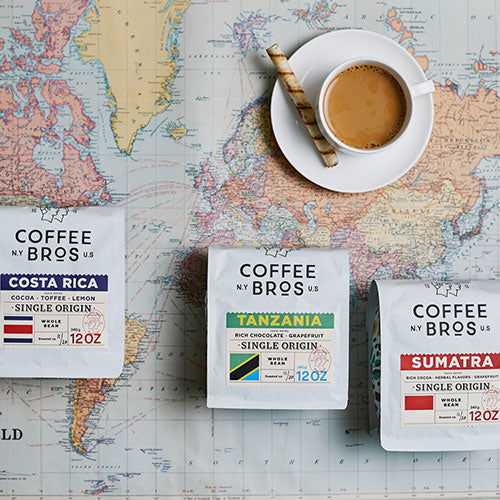
Single-origin coffee comes from a specific location. Depending on the roaster, that may mean a producer, farm, washing station, cooperative, region, or country.
Single Origins are often prized for their traceability and ability to showcase the characteristics of a particular place.
Blends combine multiple coffees to create a specific flavor profile.
Some blends combine multiple countries. Others combine different producers, varieties, or processing methods.
At Coffee Bros., we love both.
Single Origins allow us to showcase exceptional producers and explore the diversity of coffee.
Blends allow us to create flavor profiles and textures that would be impossible with a single coffee alone.
Recommended Reading: The Ultimate Guide to Single Origin Coffee vs Coffee Blend
Rather than asking whether Single Origins or blends are better, ask yourself:
Do I want to explore a specific coffee or enjoy a carefully crafted flavor profile?
Both approaches can produce extraordinary coffee.
Why Traceability Matters
One of the easiest shortcuts to finding high-quality coffee is traceability.
The more information a roaster provides, the better.
Look for:
- Producer name
- Farm name
- Region
- Elevation
- Variety
- Processing method
Historically, coffee was often sold simply as "Colombia" or "Guatemala."
Today's specialty coffee industry allows us to know much more.
Just as wine drinkers care about vineyards and grape varieties, coffee drinkers can learn a tremendous amount from understanding where their coffee comes from.
Traceability doesn't automatically guarantee quality, but it is often a strong indicator that a roaster is serious about sourcing.
Understanding Roast Levels
One of the biggest misconceptions in coffee is that darker automatically means stronger.
Roast level primarily impacts flavor.
Light Roast
Expect:
- Higher acidity
- More fruit and floral notes
- More origin characteristics
Medium Roast
Expect:
- Balanced sweetness
- Moderate acidity
- Chocolate, caramel, and fruit notes
Dark Roast
Expect:
- Lower acidity
- More roast character
- Chocolate, nuts, caramel, and smoke
At Coffee Bros., we often recommend medium roasts as the best starting point because they balance sweetness, body, and origin character exceptionally well.
Recommended Reading: The Ultimate Guide to Understanding Coffee Roast Levels
Understanding Coffee Processing Methods
Processing is one of the biggest drivers of flavor.
Washed Process
Expect:
- Clean flavors
- Bright acidity
- High clarity
Natural Process
Expect:
- Larger fruit flavors
- Increased sweetness
- Heavier body
- More fermentation character
Honey Process
Expect:
- Balanced sweetness
- Rich texture
- Moderate fruit complexity
Anaerobic & Experimental Processing
Expect:
- Intense fruit notes
- Unique aromatics
- More adventurous flavor profiles
If you're new to specialty coffee, washed coffees are often the easiest place to start.
If you're looking for something exciting and memorable, natural and anaerobic coffees can be incredibly rewarding.
Don't Take Tasting Notes Too Literally
One of the most common questions we hear is:
"Why doesn't my coffee taste exactly like strawberries?"
Tasting notes are not ingredients.
Nobody added strawberries, peaches, or chocolate to the coffee.
Instead, tasting notes are comparisons.
Roasters use them to communicate what flavors stood out while comparing coffee to dozens of others.
Think of tasting notes as directional guidance rather than promises.
They're there to help you understand the coffee's general characteristics.
Match Coffee to Your Brew Method
For Espresso
Look for:
- Espresso blends
- Medium roasts
- Chocolate and caramel notes
- Coffees specifically roasted for espresso
Lighter coffees can work here too, but you'll need a machine that has temperature control.
For Milk Drinks
Look for:
- Darker coffees
- Chocolate
- Nuts
- Brown sugar
- Toffee
- Caramel
These flavors tend to pair exceptionally well with milk.
For Pour Over
Look for:
- Single Origins
- Washed coffees
- Lighter roasts
- Fruit-forward profiles
Pour overs often highlight clarity and origin character better than any other brewing method. Darker coffees can certainly work for pour overs as well but you'll need a good way to measure temperature to avoid bitterness.
Understanding Why Some Coffees Cost More Than Others
Coffee pricing can be confusing.
One bag may cost $14, while another may cost $30.
The difference often comes down to:
- Quality score
- Traceability
- Producer reputation
- Processing method
- Variety
- Lot size
- Availability
A highly traceable micro-lot from a producer experimenting with a unique processing method may yield only a small number of bags.
Naturally, those coffees command a premium.
At Coffee Bros., we don't chase expensive coffees simply because they're expensive.
We chase coffees that deliver exceptional quality and create memorable experiences in the cup.
Sometimes that's a rare Gesha.
Sometimes it's a beautifully executed washed coffee from a producer we've worked with for years.
The goal is always the same:
Find coffees that are worth sharing.
How We Buy Coffee at Coffee Bros.
One of the questions we receive most often is:
"How do you choose your coffees?"
The answer is simple.
We taste a lot of coffee.
Every year, we evaluate hundreds of coffee samples from producers, exporters, and importers around the world. Over time, that adds up to thousands of coffees cupped throughout our careers.
While quality scores provide an important starting point, we don't simply purchase the highest-scoring coffee available.
We evaluate:
- Cup quality
- Flavor profile
- Traceability
- Consistency
- Producer relationships
- Processing innovation
- Seasonal availability
- Long-term partnership potential
Some years mean sourcing a very limited micro-lot. At other times, it means returning to a producer we've worked with for years because they continue to deliver exceptional quality harvest after harvest.
Ultimately, our goal isn't to chase scores.
It's to find coffee that excites us enough that we can't wait to share it with our customers.
The Power of Two: Why Relationships Matter
One of the ideas that guides Coffee Bros. is what we call the Power of Two.
Great coffee doesn't happen in isolation.
Every exceptional coffee represents the combined work of producers, exporters, importers, roasters, and customers.
Some of our favorite coffees come from partnerships we've built over multiple years.
We've worked closely with producers and sourcing partners such as InConexus in Colombia, Café Granja La Esperanza, Aquiares in Costa Rica, Agricafe in Bolivia, Frinsa in Indonesia, Naandi in India, and El Socorro in Guatemala because they consistently share our commitment to quality and innovation.
When we find producers who share our values, we don't simply buy their coffee once and move on.
We build relationships.
Those relationships allow us to better understand each producer's work, support consistency from harvest to harvest, and bring back coffees our customers have come to love year after year.
Some of our most anticipated releases each year aren't new coffees at all—they're the return of coffees and producers that have earned a permanent place in our lineup.
A Quick Coffee Buying Checklist
Before purchasing coffee online, ask:
✓ Is a roast date provided?
✓ Is the producer or origin identified?
✓ Is the processing method disclosed?
✓ Are tasting notes included?
✓ Does the roaster provide brewing recommendations?
✓ Is there transparency around sourcing?
✓ Does the coffee sound like something I would personally enjoy?
If the answer is yes to most of these questions, you're probably looking at a roaster that takes quality seriously.
Final Thoughts
Buying specialty coffee online doesn't need to be intimidating.
Start with freshness. Learn what flavors you enjoy. Pay attention to origins, roast levels, and processing methods. Explore both Single Origins and blends. Buy from roasters who care deeply about sourcing, transparency, and quality.
Most importantly, don't stop exploring.
Coffee is one of the most diverse agricultural products on the planet.
Every producer, processing method, harvest, and roast tells a slightly different story.
The more coffees you try, the easier it becomes to discover exactly what makes your perfect cup.
Frequently Asked Questions
What does "specialty coffee" actually mean?
Specialty coffee is defined by a standardized 100-point scoring system developed by the Specialty Coffee Association (SCA), and any coffee scoring 80 points or higher qualifies. At Coffee Bros., specialty grade is the starting point, not the finish line.
Why does the roast date matter when buying coffee online?
A roast date tells you exactly when the coffee was roasted, so you can enjoy it within its peak flavor window, generally 1 to 6 weeks after roasting. A best-by date, by contrast, tells you very little about actual freshness or quality.
Should I buy whole bean or pre-ground coffee?
Whole bean coffee is strongly recommended because grinding dramatically increases surface area and accelerates staling. Buying whole beans and grinding right before brewing delivers better flavor, better aroma, and more brewing flexibility.
Is single-origin coffee better than a blend?
Neither is inherently better. Single-origin coffees highlight the characteristics of a specific place, while blends are crafted to achieve flavor profiles and textures that a single coffee alone cannot produce.
How do roast levels affect flavor?
Roast level primarily impacts flavor, not strength. Light roasts tend to be more fruit-forward and acidic, medium roasts offer balanced sweetness and body, and dark roasts lean toward chocolate, nuts, and roast character.
Why don't tasting notes always match what I taste in the cup?
Tasting notes are comparisons, not ingredients. Roasters use them to communicate general flavor characteristics relative to other coffees, so they are best treated as directional guidance rather than precise promises.
How should I match coffee to my brewing method?
For espresso and milk-based drinks, look for medium to darker roasts with chocolate, caramel, or toffee notes. For pour over, single-origin washed coffees with lighter roasts tend to highlight clarity and origin character best. Though light coffees can work as espresso and dark coffees most certainly work well with pour over. As mentioned, always start with your taste preferences and adjust brew method inputs like time, temperature, and dose to achieve your desired taste profile.
Why do some specialty coffees cost significantly more than others?
Price differences often reflect quality score, traceability, producer reputation, processing method, variety, and lot size. A highly traceable micro-lot using an experimental processing method may yield very few bags, which naturally commands a higher price.
What should I look for when evaluating a coffee roaster online?
Look for roasters who provide a roast date, identify the producer or origin, disclose the processing method, include tasting notes, and offer transparency around sourcing. These are strong indicators that a roaster takes quality seriously.